The Canadian Renewable Energy Association has a great guide to help you go solar:
Learn about
• How solar works
• Savings from solar
• Considerations for going solar based on your home, location, etc.
• How to choose an installer and what to ask them
• A directory of contractors
Don't forget to ask about rebates and incentives that may apply in your area.
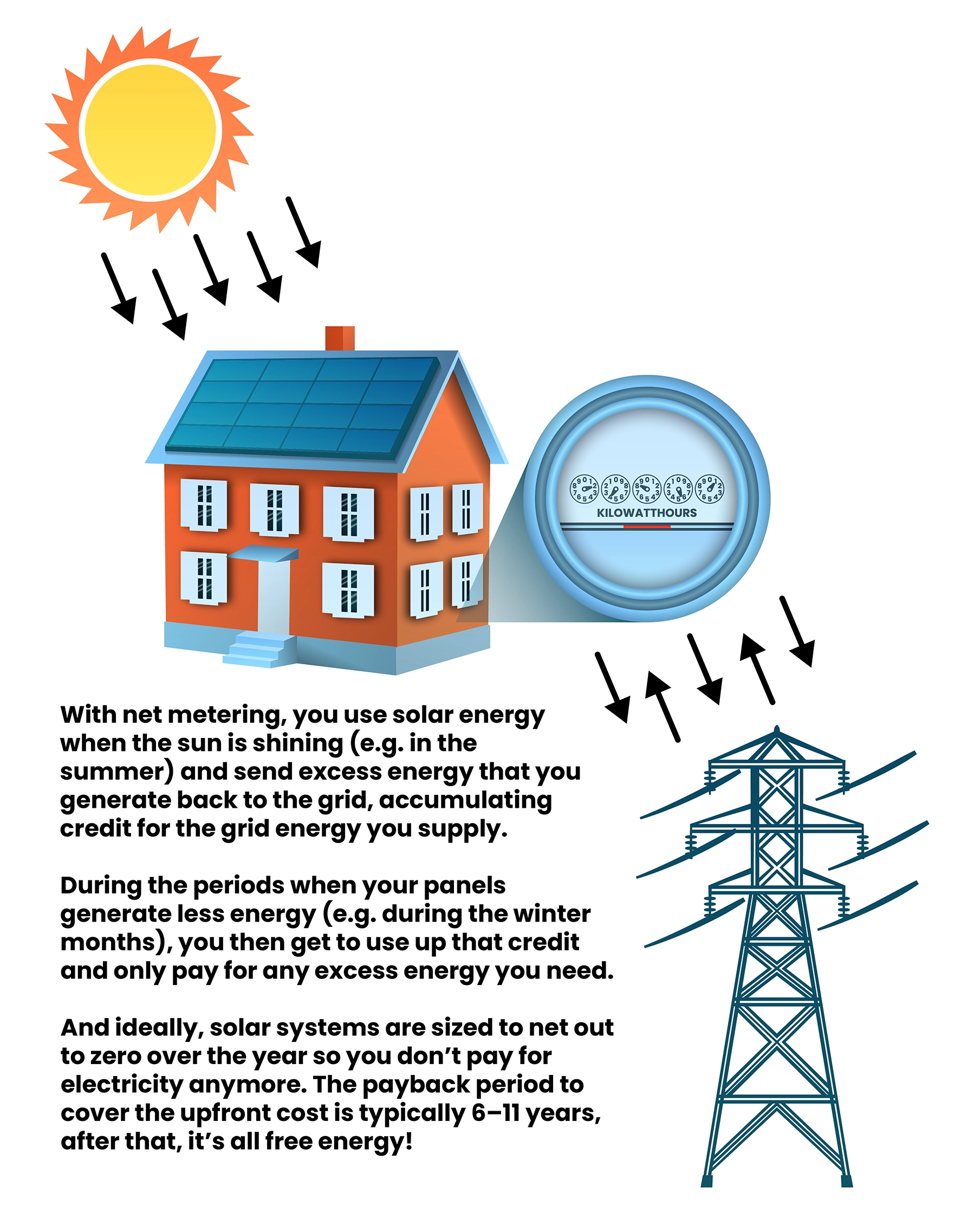
Battery storage is not required for “on-grid” homes because of solar net metering. However, they can be a great compliment to solar for supplying energy during power outages and to manage peak demand.
They also may qualify for incentives/rebates in your area. A solar vendor can help you assess whether battery storage makes financial sense in your circumstances.
This is an exciting area to watch of the next few years as solutions becomes increasingly affordable!

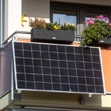
Plug-in solar is a do-it-yourself clean energy solution that not only help power appliances and devices in homes but lower electricity costs.
The electricity produced from the panel pushes electricity at a “slightly higher pressure” than the rest of the electricity coming in from the grid, allowing you to plug your solar panel directly into a regular wall socket.
This is another space to watch in Canada. It is not available just yet but it is being adopted in so many other places it is only a matter of time until we can have access to plug-in solar too!
• In Australia, about 42% of homes have solar panels as of 2026.
• In the Netherlands, about 34% of homes have solar panels as of 2023.
• In Pakistan, a consumer-led solar revolution installed 275GW in 2 years.
• China leads the world in distributed (rooftop) solar energy with 225GW of installed capacity as of 2023.
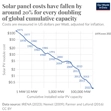
• Solar photovoltaic costs fell by 90% in the decade leading up to 2022. (ie. the cost of the panels, not permits, installation etc.)