Why buy an EV?

• They cut your carbon pollution significantly (gas cars are typically one of the largest sources of a household's carbon pollution.)

• They improve air quality, improving health.

• They cut vehicle energy costs in half and reduce maintenance costs.

• They reduce noise pollution!

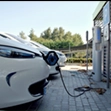
• They are super convenient to charge for many owners.

• They are cool, modern, electrotech transportation options.

This is a critical part of the energy transition away from fossil-fuelled climate change.

Ready to consider an EV?

Here are some Canadian resources to help you select the best option for your family and circumstances:

Plug N' Drive Canada

You may also find sites that list used EVs for your area.

Electric Vehicle Network (Ontario)

AutoTrader

Comparing costs with gas cars

The lifecycle cost of an EV is lower than that of a gas car even though the upfront cost is slightly higher (but not as high as you might assume!)

It costs a lot less to run and maintain an EV; energy costs are about half that of fuelling with gas and charging can often be accomplished via the comfort of your own home. How convenient!

Are there government rebates or other financing for EVs?

Yes! A federal rebate came into effect again in 2026 that covers many models.

Electric Vehicle Affordability Program Vehicle List

Some provinces and/or municipalities also have rebates and financing. These change over time so double check current availability or ask an EV car dealer.

Dealers usually apply the discount for you so you don't have to do any of the paperwork.

What about charging rebates?

Home charging rebates are available in some provinces and/or municipalities. Search for local incentives and any associated timeframes so you don't miss programs when they are available!

Note that there may be options for renters, homeowners, and landlords.

There are also several companies that offer home charging adapters that pay you per kWh of charge. Explore some here.

Not sure yet?

Have a look through the myths and barriers section below where we address common misconceptions and valid considerations.

Progress and Impact

Some Stats

• 1 in 4 new cars sold worldwide was electric in 2025, up 20% from 2024

• Close to 55% of new cars sold in China were electric in 2025.

• 97% of new cars sold in Norway were electric in 2025.

• In Canada, the percentage of new cars sold that were electric was 17% in 2024, 11% in 2025 — but in B.C. and Quebec, adoption was higher at 22–24%

Common Myths and Barriers

Electric vehicles explode

EVs are much less likely to catch fire than combustion-engine vehicle

In Norway, where more than one third of cars on the road are electric, standard combustion engine vehicles catch fire around 5 or 6 times more often than EVs.

Emergency services were called to around 30 fires per 100,000 standard cars on the road per year during 2018–2022, compared with around 5 EV fires per 100,000 vehicles.

It should be noted that traditional fuels such as gasoline and diesel are extremely flammable but safety measures were put in place to lower the chance of fuel combustion happening outside of the engine itself.

EV batteries are unreliable and need to be replaced every few years

Modern EV batteries are typically warranted for at least 8 years

Modern EV batteries are typically warranted for at least 8 years and 160,000km but they typically last at least 15–20 years or more (time will tell once batteries reach that age.)

Battery technology is also changing rapidly making batteries increasingly more efficient and long-lasting.

EV batteries create toxic waste and drive excessive need for critical mineral mining

EV batteries are still useful after they are decommissioned from vehicles

Old batteries are typically replaced when they reach about 80% of their original capacity which means they can still be used for grid/long-term storage.

Modern batteries can also be recycled decreasing pressure on mining for precious minerals.

EV batteries don't last long

Most EV Batteries will outlast the cars themselves

A recent report analyzed over 8,000 battery tests across 36 automakers—covering EVs ranging from brand new to 2 years old and over 250,000 km of use—and found average battery health at 95% of original capacity. The average battery capacity for vehicles 8–9 years old is 85%. Testing found that charging and usage habits matter more than mileage when it comes to battery health.

EV batteries don't work in cold climates

Norway leads the world in EV adoption

It gets pretty cold in the Scandinavian nation of Norway that has been adopting EVs faster than any other nation with 9 out of 10 new vehicles sold being EVs. The number of electric cars on the road now outnumbers gas cars.

EVs are less affordable than gas cars

The total cost of ownership of an EV is significantly cheaper than that of a gas car.

Clean Energy Canada analyzed a number of popular electric car models, comparing their total ownership costs with that of gas equivalents. With just one exception, the electric version of every car analyzed was cheaper, usually significantly so.

With new markets opening up to Canadians for more affordable EVs, the costs will only continue to go down.

EVs are not suitable for cold Canadian winters

While some range loss can be expected, it is not enough to make EVs unsuitable for winter temperatures

EVs do lose some range during extreme cold, but studies have shown no more than 30% and as low as 8% for some makes and models.

Modern EVs also have considerably more range than required for most daily journeys and most modern EVs have battery heating options that preheat the battery before driving to reduce range loss.

Cold weather can also increase gas car fuel consumption by up to 28%, reducing range and increasing fool costs and unlike a gas car, EVs do not have problems starting in cold weather.

EVs are worse for the climate because of power plant emissions

EVs typically have a smaller carbon footprint than gasoline cars, even in places where the grid does not use clean electricity

Battery-electric vehicles (BEVs) yield 52% to 77% lower lifetime carbon emissions than conventional gasoline cars, despite producing higher emissions during the initial manufacturing process.

Most of Canada's electricity, also comes from non-polluting sources. But even when electrical grids are powered by fossil fuels, it is still less carbon intensive to charge a battery than to burn gasoline in a vehicle directly.

They are also far more energy efficient than gas cars. EVs use about 87-91% of the energy from battery and regenerative breaking to propel the vehicle. Gasoline vehicles only convert about 16-25% of the energy from gas into movement.

‍

EVs cost more to operate because electricity costs are high

EV costs are much lower to operate than fossil-fuelled cars in Canada and elsewhere

Electric vehicles, on average, are cheaper to own than gasoline vehicles with large savings over their lifetimes. While sticker prices, depreciation rates, and insurance costs are a little higher, these are largely offset by greater cost savings in maintenance, repair and refueling.

In fact, a number of carbon credit programs are available in Canada that pay EV owners per kWh of charge when they charge at home.  In some cases, for example, when charging off peak rate times, this can mean that homeowners get paid back more than what they pay to charge their vehicles.

Gas powered vehicles are more efficient

Electric vehicles are much more efficient than gas powered vehicles

Most of the energy from a battery goes to moving an electric vehicle and the battery charges with regenerative breaking. Gasoline powered vehicles lose most of their energy to heat.

The increase in electric vehicles entering the market will collapse the power grid

Grid infrastructure is already expanding

This is not a risk today even if EV adoption rates increase significantly, and it can prevented as EV adoption / electrification occurs simultaneously with grid expansion and the implementation of distributed energy such as solar, vehicle to grid charging and other technologies.

All provinces are also planning for significant increases in grid capacity.

‍

The pollution from manufacturing lithium-ion batteries outweigh the environmental benefits of driving an EV

Taking into account the lifecycle of the vehicle, gasoline powered cars emit far more carbon pollution than lithium-ion batteries

It is true that EV manufacturing has a higher emissions footprint due to lithium-ion batteries.

But as soon as the car hits the road, gasoline cars begin a lifetime of carbon pollution emissions while EVs make up for their battery manufacturing emissions with the first 18,000–36,000 kilometres driven.

EVs are also more efficient in their energy use with almost two-thirds of the energy used in a gasoline car being lost to heat. Even an electric car charged from an energy grid powered by fossil fuels is more efficient and less carbon pollution intense than burning gasoline directly.

No matter where you live in Canada, EVs are better for the planet than internal-combustion engines and its not even close.

EV batteries can also be given a second life after they are decommissioned from vehicles as grid energy storage and eventually can be recycled as they are made from recyclable materials.

There is nowhere to charge EVs

EVs can be plugged into the same type of outlet as your toaster!

EVs can be plugged into the same type of outlet as your toaster!

You can also install a fast charger at home.

And there are >38,000 charging stations in Canada with plans for significant expansion announced in 2026.

More myths and barriers here.