Here are some common myths about climate solutions and barriers to action. You can filter by subject.

A plant-based diet doesn't provide enough iron

Vegans and vegetarians with a healthy, balanced diet get enough iron from plant-based sources.

Plant-based foods with high iron content include dried figs and apricots, firm tofu, quinoa, cashews, kale, peas, lentils, kidney beans, hemp seeds, oats, chickpeas, and pumpkin seeds.

Businesses don't care about climate change

Companies big and small do care about climate change

Companies do care about climate change and are taking climate action. At least 45% of S&P500 companies have net zero aligned climate commitments. 1000s of companies big and small have climate action plans and net zero targets. Countless sustainable products have come on to the market to support your transition to sustainable living. You just need to look!

Canada is alone in implementing heat pump technology

Many countries in Europe are eliminating fossil fuel-based heating systems as well as several jurisdiction in the U.S.

Many countries in Europe, including France, Ireland, the Netherlands and Norway, have bans on oil and gas boiler installation in new buildings.

Canada’s emissions are negligible. If you want to address climate change, look at the big emitters like China and India.

It’s true that Canada emits less than 2% of global greenhouse emissions but this is not a valid argument against implementing robust climate policies.

Canada’s climate action matters on a global scale because…

• Although our total emissions may seem low, our per person emissions are among the worst in the world. While countries like China have more total emissions, Canada's per person emissions are twice as high as China's.

• If every country with less than two per cent of global emissions did nothing, the biggest chunk of emissions would remain unaddressed. Only six countries have emissions that account for more than 2% of the global total. Every country that emits less than 2% makes up 36% of emissions collectively.

• Wealthy countries such as Canada that have emitted the most historically have the best means to reduce emissions and therefore the moral responsibility to do so. Climate change is driven by the cumulative, not annual, amount of greenhouse gas emissions. So, the historical context of which countries have emitted the most over time matters. Canada is ranked 10th in the world for total cumulative emissions.

• The fossil fuels we export don’t count toward our national emissions. Canada exports most of its crude oil and just under half of its natural gas. The burning of these fossil fuels is 1.3x more than the total greenhouse gases emitted at home. When you take this into account, it becomes clear that Canada's energy sector, energy policies, and climate ambition are significant on the global stage.

• Canada is sitting on the 3rd largest oil and gas reserves in the world, representing 10% of all global deposits. Leaving our massive, environmentally destructive, oil and gas deposits in the ground would go a long way to preventing further climate chaos.

Canadians don't care about climate change

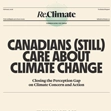
Three quarters of Canadias are concerned about climate change

According to a recent survey:
• 75% of Canadians are concerned about climate change and believe that future generations will be harmed.
• 75% of Canadians are optimistic that it is possible to reverse its consequences.
• Almost 70% of Canadians agree that if everyone does their bit, we can tackle it's causes.
• 65% of Canadians want leaders to keep their promise to take more action on climate change.
• 70% of Canadians agree that the government should regulate polluters causing climate change.
• 70% of Canadians feel pride in Canada becoming a renewable energy superpower.

Climate activism doesn't work

Climate activism works

Research across 50 diverse studies showed strong evidence that climate activism shifts public opinion and media coverage in a pro-climate direction, influences political communication and voting behaviour, and can pressure companies financially.

Divesting of fossil fuels will hurt my financial returns

The fossil fuel sector has under-performed the broad market for over a decade and has a negative long-term financial outlook

Global supply disruptions from the war involving Iran have spiked crude and LNG prices, generating tens of billions in extra revenue for oil producers in Canada. However, ‘Canadian’ oil producers are largely owned by foreign companies so much of this war-related windfall leaves the country. And the short-term geopolitical price spikes do not justify capital-intensive fossil fuel infrastructure. Markets are expected to re-balance, and global transitions to renewable energy will structurally erode long-term export demand.

Research also indicates that there is either an economic benefit, or at least no adverse impact from divesting of fossil fuels in your portfolio.

Electric vehicles explode

EVs are much less likely to catch fire than combustion-engine vehicle

In Norway, where more than one third of cars on the road are electric, standard combustion engine vehicles catch fire around 5 or 6 times more often than EVs.

Emergency services were called to around 30 fires per 100,000 standard cars on the road per year during 2018–2022, compared with around 5 EV fires per 100,000 vehicles.

It should be noted that traditional fuels such as gasoline and diesel are extremely flammable but safety measures were put in place to lower the chance of fuel combustion happening outside of the engine itself.

EV batteries are unreliable and need to be replaced every few years

Modern EV batteries are typically warranted for at least 8 years

Modern EV batteries are typically warranted for at least 8 years and 160,000km but they typically last at least 15–20 years or more (time will tell once batteries reach that age.)

Battery technology is also changing rapidly making batteries increasingly more efficient and long-lasting.

EV batteries create toxic waste and drive excessive need for critical mineral mining

EV batteries are still useful after they are decommissioned from vehicles

Old batteries are typically replaced when they reach about 80% of their original capacity which means they can still be used for grid/long-term storage.

Modern batteries can also be recycled decreasing pressure on mining for precious minerals.

EV batteries don't last long

Most EV Batteries will outlast the cars themselves

A recent report analyzed over 8,000 battery tests across 36 automakers—covering EVs ranging from brand new to 2 years old and over 250,000 km of use—and found average battery health at 95% of original capacity. The average battery capacity for vehicles 8–9 years old is 85%. Testing found that charging and usage habits matter more than mileage when it comes to battery health.

EV batteries don't work in cold climates

Norway leads the world in EV adoption

It gets pretty cold in the Scandinavian nation of Norway that has been adopting EVs faster than any other nation with 9 out of 10 new vehicles sold being EVs. The number of electric cars on the road now outnumbers gas cars.

EVs are less affordable than gas cars

The total cost of ownership of an EV is significantly cheaper than that of a gas car.

Clean Energy Canada analyzed a number of popular electric car models, comparing their total ownership costs with that of gas equivalents. With just one exception, the electric version of every car analyzed was cheaper, usually significantly so.

With new markets opening up to Canadians for more affordable EVs, the costs will only continue to go down.

EVs are not suitable for cold Canadian winters

While some range loss can be expected, it is not enough to make EVs unsuitable for winter temperatures

EVs do lose some range during extreme cold, but studies have shown no more than 30% and as low as 8% for some makes and models.

Modern EVs also have considerably more range than required for most daily journeys and most modern EVs have battery heating options that preheat the battery before driving to reduce range loss.

Cold weather can also increase gas car fuel consumption by up to 28%, reducing range and increasing fool costs and unlike a gas car, EVs do not have problems starting in cold weather.

EVs are worse for the climate because of power plant emissions

EVs typically have a smaller carbon footprint than gasoline cars, even in places where the grid does not use clean electricity

Battery-electric vehicles (BEVs) yield 52% to 77% lower lifetime carbon emissions than conventional gasoline cars, despite producing higher emissions during the initial manufacturing process.

Most of Canada's electricity, also comes from non-polluting sources. But even when electrical grids are powered by fossil fuels, it is still less carbon intensive to charge a battery than to burn gasoline in a vehicle directly.

They are also far more energy efficient than gas cars. EVs use about 87-91% of the energy from battery and regenerative breaking to propel the vehicle. Gasoline vehicles only convert about 16-25% of the energy from gas into movement.

‍

EVs cost more to operate because electricity costs are high

EV costs are much lower to operate than fossil-fuelled cars in Canada and elsewhere

Electric vehicles, on average, are cheaper to own than gasoline vehicles with large savings over their lifetimes. While sticker prices, depreciation rates, and insurance costs are a little higher, these are largely offset by greater cost savings in maintenance, repair and refueling.

In fact, a number of carbon credit programs are available in Canada that pay EV owners per kWh of charge when they charge at home.  In some cases, for example, when charging off peak rate times, this can mean that homeowners get paid back more than what they pay to charge their vehicles.

Gas powered vehicles are more efficient

Electric vehicles are much more efficient than gas powered vehicles

Most of the energy from a battery goes to moving an electric vehicle and the battery charges with regenerative breaking. Gasoline powered vehicles lose most of their energy to heat.

Heat pump installations are rare in Canada

Canada is electrifying

Heat pump adoption continues to grow across the country and particularly in the Atlantic Provinces, Quebec and British Columbia, driven in part by government incentive programs.

Montreal, Vancouver, Victoria and other Canadian cities are also driving the transition with fossil fuel bans for new buildings.

Heat pumps always require a backup heating system

All electric cold-climate heat pumps suited for Canada have a built-in electric backup

The backup that supplements the heat pump on the handful of super cold days in the winter. The heat pump runs the whole time. The electric backup starts up to help out as needed.

While some systems incorporate supplemental electric resistance heating for extremely cold days, it's not a necessity for all installations.

Heat pumps don't work in cold climates

There are heat pumps specifically for cold climates

While standard air source heat pumps tend to lose heating capacity when temperatures dip below zero, cold climate air source heat pumps are specially designed to work in temperatures as low as -30°C.

Heat pumps dramatically increase electricity / energy bills

Monthly energy costs are similar to natural gas, particularly in an electrified home where you aren’t paying the fixed monthly fee for gas.

Switching from oil, propane, or electric resistance heating results in significant annual savings on energy in virtually all scenarios.

Heat pumps only work in new buildings

Millions of buildings of all ages have been fitted with heat pumps around the world

After conducting several case studies of old homes with air-source heat pumps, public body Historic England concluded in a report last year that these “work well in a range of different historic building types and uses.”

The Fraunhofer Institute in Germany carried out extensive field testing and monitoring of hear pumps in existing buildings and concluded that they worked reliably and without problems.

Increased carbon dioxide is good for agriculture

Overall, climate change is net-negative for global agriculture and food systems

While true that many plants do respond positively to higher amounts of carbon dioxide, the claim that greenhouse gas emissions are actually better for plants and agriculture is specious at best.

The claim doesn't account for the extreme weather that comes as a result of accumulated carbon dioxide in the atmosphere.

Droughts, flooding, and larger more widespread wildfires are not good for plants or agriculture. Increased pest infestations and pollinator decline are also not good for plants or agriculture.

While a few high-latitude regions may see localized benefits, the global consensus from organizations like the Intergovernmental Panel on Climate Change (IPCC) and the Food and Agriculture Organization (FAO) is that climate change slows agricultural productivity, reduces crop yields, degrades food quality, and destabilizes supply chains.

Investing in fossil fuels is a Canada Strong strategy

Most of the oil sands are owned by foreign companies

Ownership of Canada's largest oil sands companies is highly concentrated and over 70% of the major shareholders are foreign entities. Foreign (mostly U.S. and China) and concentrated ownership has grown substantially over the last decade.

Investing in fossil fuels is a good long term strategy

New oil and gas projects heighten long term financial risk for Canadians

Temporary war-time profits aside, keeping Canadian regional economies tied to oil and gas puts risk not only on oil and gas investors, but also on communities. Surging oil prices reveal inherent risks in a non-renewable, oil-dependent system.

Countries in Asia, Africa, and elsewhere are speeding up the shift from fossil fuels to clean electricity showing clean energy investments on the rise and fossil fuel financing stagnating.

Investing sustainably leads to lower returns

Sustainable investments can generate comparable or better returns to a traditional benchmark

Years of performance data now shows that sustainable strategies often perform in line with — or in some cases, outperform — a traditional benchmark.

Why? Extensive data, corporate disclosure, and regulatory reports give investors new insights into how well companies are managing environmental, social and governance (ESG) risks and opportunities.

It's impossible to get enough protein without eating meat

Nutritionists say it’s not only possible to get enough protein on a plant-based diet—but eating a lot more of it has some distinct advantages.

Plant-based protein sources are abundant, healthy, delicious, and more often than not, inexpensive. There are plenty of tasty new and traditional recipes that are packed with protein and contain no meat at all.

Foods with high amounts of protein include:
• Seitan — 25g of protein per 100g
• Soybean (ie Tofu, Tempeh, Edamame) — 12–20g of protein per 100g
• Lentils — 17.9g of protein per cup
• Green Peas — 8.58g of protein per cup
• Chickpeas – 21.3g of protein per cup
• Quinoa – 8g of protein per cup
• Beans
  - Pinto Beans — 15.4g of protein per cup
  - Mung Beans — 14.2g of protein per cup
  - Fava Beans — 12.9g of protein per cup
  - Lima Beans — 11.6g of protein per cup
• Brussel Sprouts — 5.64g of protein per cup
• Pistachios & Almonds — 5.31g of protein per cup
• Avocado — 4g of protein per medium avocado
• Hemp Seeds — 3g of protein per tablespoon
• Broccoli — 4–5g of protein per stock

Eating more plant protein is important—but not just because of protein alone. Although this nutrient is essential for overall health, "the vast majority of Americans meet and exceed their protein intake requirement and there are only rare cases of protein deficiency in the general population—even among vegetarians and vegans."

Plant sources of protein also contain plenty of other nutrients such as magnesium, copper, manganese, selenium, riboflavin, and vitamins A, C, K, and E—vitamins and minerals that are often missing from animal proteins.

It’s not worth it to repair cheap clothes

Keeping the same clothes in rotation is the best thing you can do to reduce your carbon footprint

Mending a fast fashion item may mean spending what you paid for it, but in doing so you keep those clothes out of the landfill.

You can also learn how to make small repairs at home to keep costs down, including replacing buttons, fixing broken zippers, resewing loose seems, and hemming pants.

Meat is required to get B12

B12 is not produced by animals but rather by soil bacteria.

Vitamin B12 is concentrated in meat but in many cases animals get B12 supplements because modern farming reduces animal uptake of soil bacteria.

People often get B12 from meat, fish and dairy products, from fortified cereals and from supplements. B12 supplements are recommended for vegetarians and vegans, pregnant and breastfeeding women, people that have low absorption due to digestive conditions, people on certain medications (e.g. metformin) and sometimes elderly people.

Microplastics are not harmful to humans

Links to human harm have been found but further research is still needed.

Microplastics can carry endocrine-disrupting chemical additives and animal studies link them to inflammation. Definitive cause-and-effect in humans is still being established, so most environmental-health researchers recommend reducing exposure where it is practical rather than waiting for certainty.

The strongest human-health signal found so far was in a 2024 study of 304 patients found that those with microplastics in their carotid artery plaque were about 4.5× more likely to have a heart attack or stroke, or to die, over the next ~34 months than those without.

Microplastics have been found all over the human body including the heart, brain tissue, blood, lungs, breast milk, and placenta.

Microplastics are only found in the ocean

Microplastics are found everywhere

We encounter microplastics everywhere from trash, dust, fabrics, cosmetics, cleaning products, rain, seafood, produce, table salt, and more.

Microplastics are so abundant they have been detected in the human body, including in the blood, saliva, liver, kidneys, brain, reproductive organs, and placenta. Humans are estimated to ingest or inhale thousands of microplastics per day.

My choices don't matter

Consumer demand shapes what companies make, promote, and prioritize

Every time you buy the more sustainable option from companies taking action, opt for quality over quantity, avoid excessive plastic packaging, refuse less durable and/or more disposable items, buy things that can be repaired, or choose experiences over owning more stuff, you are putting pressure where businesses pay the most attention.

Policy drives systemic change but consumer behaviour fuels it.

Natural gas is clean

Natural gas is a fossil fuel just like oil and coal

Natural gas, a.k.a. fossil gas, is not clean energy. It contains methane—a very potent greenhouse gas that escapes when natural gas is pulled from the ground, processed, and piped to homes and businesses. Methane leaks make fossil gas nearly as bad as coal in terms of its contribution to climate change. And natural gas releases carbon dioxide when it is burned, a less potent but far more persistent greenhouse gas.  Methane and carbon dioxide are the two largest contributors to the extreme temperatures and severe weather events caused by climate change.

People are not taking climate action

People underestimate how much other people care about and are willing to act on climate change

Globally and in Canada, people underestimate how much other people care about and are willing to act on climate change. Key transitions requiring individual action, like shifting to clean energy transportation and efficient, clean energy homes are happening in Canada and elsewhere. Behavioural shifts in consumption towards sustainable products are also occurring, led by Gen Z consumers.

People don't care about climate change

Most Canadians are worried about climate change and want governments and industries to tackle the problem.

A vast majority of people globally care about climate change, including a strong majority in Canada, where ~70% are worried about climate change. About 60% of Canadians are aware that climate change is mostly caused by humans. About 60% also support the phase-out of fossil fuels.

People don't vote for climate policy

They do whether they realize it or not

When people vote for or against pipelines they are voting for climate policy. When they vote about water security, disaster response, protection of farmland, parks and green spaces, higher density housing, protection of unhoused individuals, tenant protections, environmental protection and protection of natural resources, AI data centres, clean jobs and economies, and more, their votes impact our progress on climate change.

People won't change their behaviour so what's the point?

People are changing their shopping behaviours based on sustainability including climate change

Plant-based diets are more expensive

When swapping traditional meat and dairy products for everyday plant-based staples like beans, grains, and vegetables, grocery spending actually goes down, not up.

While it varies by region, data shows that consumers can save 16–40% on groceries with whole-food plant-based diets and that vegetarians tend to spend $11–19 less each week than meat-eaters on average.

The perception that plant-based diets are more expensive is only true if the diet contains large quantities of alt-dairy and alt-meat products. When people hear ‘plant-based’ they tend to compare a $7 plant-based burger with $5 ground beef instead of $1.50 cans of beans or $2 bags of lentils.

According to data from Statistics Canada, the price of meat and dairy have gone up significantly more in the past decade compared to plant-based foods.

Plant-based diets don't provide enough calcium

There is typically no difference in calcium intake among vegetarians and meat-eaters

Both Vegan and vegetarian diets provide sufficient calcium when they include calcium-rich foods.

Plastic packaging and single-use bottles are everywhere and the tide won't change anytime soon

The tide is changing!

Places like Chile and the European Union have laws in place or soon to be in place that require retailers (including supermarkets) to offer a certain amount of beverages for sale in reusable packaging. And in countries like Mexico, Brazil, the Philippines, and Germany, refillable bottles are already widely used. More pressure is needed to bring refillable bottles to all markets.

Public transportation isn't safe

It's actually safer than driving a car

According to the American Public Transportation Association, public transportation is ten times safer per mile than travelling by automobile. One can reduce their chance of being in a traffic accident by more than 90% by taking public transit over commuting by car.

Solar doesn't make sense because the sun doesn't always shine

Luckily, there are solutions for that

In most Provinces, net metering programs are in place so that homeowners get extra credit for producing more than they need when the sun is shining and can use that credit when they don't produce enough to cover their needs.

Residential battery solutions are also becoming increasing popular to store excess energy for a snowy day.

Solar doesn't work in Canadian climate

Solar panels perform exceptionally well in Canada.

Despite common myths, solar panels perform exceptionally well in Canada. Cold temperatures actually increase the electrical efficiency of panels, and the reflection of light off snow (albedo effect) frequently enhances energy generation during winter months.

Solar is expensive and doesn't have an ROI

The average Canadian breaks even on solar panels in 6-10 years

After breaking even, you enjoy 15–20+ years of free electricity. Homes with solar sell at a premium as well.

Solar panels are not efficient

Solar panels ARE efficient.

Solar efficiency refers to the percent of sunlight a panel converts to electricity. Efficiency of modern panels is typically in the 20-25% range. That is plenty of sunshine even in Canadian climates. Most single detached homes can fit enough solar panels to cover 100% of a household’s annual electricity needs.

Solar panels are not recyclable

Solar panels last for 25 years and are 90% recyclable

In Canada and globally, innovation in solar panel recycling methods and infrastructure is ahead of the future need.

Solar panels are ugly

There are multiple styles to choose

Modern solar panels are sleek, thin and lie flat against a roof and there are multiple styles to choose from.

Solar panels don't make financial sense in a cold climate

You can calculate the payback period and ROI for solar based on where you live in Canada

Payback periods tend to range from 7-14 years. 25-year (life of the panels) ROIs for major Canadian cities, for example, fall within the 140-220% range.

Solar panels don't work in winter or colder climates

As long as your panels aren't covered in snow, they can generate plenty of clean energy

While it's true that solar production is higher in the summer due to longer daylight hours, that doesn't mean your system stops working when temperatures drop.

Since solar panels generate electricity from sunlight, not heat, colder temperatures actually improve efficiency—helping your system produce more power than you might expect.

Solar panels don't work on cloudy days

Solar panels continue to produce energy on cloudy days but at a reduced capacity

Productivity estimates also account for typical production in your geography, so account for typical cloud coverage.

‍

Solar panels require high maintenance

Solar panels require almost no maintenance

Dirt has little impact on productivity and it is rarely necessary to clean snow off panels as well. As with any equipment, it is possible that parts will need replacement but this is rare with current solar panel technology.

Critter guards are often installed to prevent wire damage from animals.

Solar panels take more energy to produce than they generate

Solar panels generate far more energy than the energy required to make, install, and recycle them

Studies estimated the energy output to be about nine times the energy invested in solar panels.

Solar panels will damage your roof

Solar panels that are installed properly will not cause roof problems

An initial roof assessment will ensure your roof is suitable for panels and will not be adversely impacted.

‍

Sustainable investing is a passing fad

Sustainable assets have increased and stabilized over time

Despite market volatility, sustainable investment fund totals have remained stable.

The growth is expected to continue due to shifting investor preferences, growth in corporate net zero pledges, policy and regulatory changes, and macro tailwinds such as the clean energy transition and sustainable technology.

Sustainable products are more expensive

They actually save you money in the long run

Yes, some eco-friendly products are more expensive than more popular non eco-friendly. However, they're often made to last longer, not to be thrown away after just a couple of uses. These products are also often made from renewable resources that meet key sustainability or green certifications to ensure they're made in a planet-friendly way.

Buying a reusable container will cost more than a disposable one, but you only need to buy it once (or every once in a while.)

And from a broader perspective, the damage done to the planet and all facets of the supply chain through pollution, unsustainable methods, and extreme weather is only raising the prices of everything. You might get something cheaper now, but you are only adding to price increases in the future.

‍

The increase in electric vehicles entering the market will collapse the power grid

Grid infrastructure is already expanding

This is not a risk today even if EV adoption rates increase significantly, and it can prevented as EV adoption / electrification occurs simultaneously with grid expansion and the implementation of distributed energy such as solar, vehicle to grid charging and other technologies.

All provinces are also planning for significant increases in grid capacity.

‍

The pollution from manufacturing lithium-ion batteries outweigh the environmental benefits of driving an EV

Taking into account the lifecycle of the vehicle, gasoline powered cars emit far more carbon pollution than lithium-ion batteries

It is true that EV manufacturing has a higher emissions footprint due to lithium-ion batteries.

But as soon as the car hits the road, gasoline cars begin a lifetime of carbon pollution emissions while EVs make up for their battery manufacturing emissions with the first 18,000–36,000 kilometres driven.

EVs are also more efficient in their energy use with almost two-thirds of the energy used in a gasoline car being lost to heat. Even an electric car charged from an energy grid powered by fossil fuels is more efficient and less carbon pollution intense than burning gasoline directly.

No matter where you live in Canada, EVs are better for the planet than internal-combustion engines and its not even close.

EV batteries can also be given a second life after they are decommissioned from vehicles as grid energy storage and eventually can be recycled as they are made from recyclable materials.

There is no good solution to replace single-use plastic bottles

The solution already exists: refillable bottles

Refillable bottles have been around since the 19th century and were how most beverages were sold until the 70s when they were replaced by single-use plastic in many countries around the world.

Where they exist, refillable bottle programs have over a 90% success rate for getting the bottle back, and each bottle can be reused up to 50 times.  

There is nowhere to charge EVs

EVs can be plugged into the same type of outlet as your toaster!

EVs can be plugged into the same type of outlet as your toaster!

You can also install a fast charger at home.

And there are >38,000 charging stations in Canada with plans for significant expansion announced in 2026.

The scientific community isn't in agreement about the cause of climate change

A survey of 88,125 climate-related studies found more than 99.9% of them show that climate change is mainly caused by humans

The consensus is well over 99% now and it's pretty much case closed for any meaningful public conversation about the reality of human-caused climate change.

Transitioning to clean energy is too expensive

A fast transition to clean energy would save the world around 12 trillion dollars.

Research has shown that rapidly transitioning to renewable energy results in lower energy system costs than a fossil fuel system while providing more energy to the global economy and expanding energy access to more people internationally.

Scaling up green technologies will also continue to drive their costs down and the faster we do this, the more we save.

We have plenty of time to deal with climate change

Climate change is already here.

We are passed the point of being able to say that climate change is something that exists in the future. It is here now. The climate is already changing and it will continue to get worse the less we act.

The more we act, the more we lessen the damage and even change the trajectory.

You can't get insurance for a heat pump without a gas backup

You do not need a gas backup for insurance

All-electric cold climate heat pumps can heat efficiently down to -25°C or even -30°C for some models. An all-electric heat pump has built-in electric backup heating to supplement the heat pump’s output on extremely cold days. Gas backups are an option but not a requirement.

You have to give up meat or go vegan

While plant-based diets are better for the environment, going completely vegan is not the only way to live a greener life

Reducing your meat consumption in any way — whether you're eating one or two plant-based meals per week, cutting back on the amount of animal-based products you consume, or sticking to Meatless Mondays — is a sustainable act.

Research suggests that even if you change your diet in small ways and eat just a little less meat, you can contribute to large-scale environmental benefits.

Beef is the biggest contributor to carbon pollution so swapping beef for poultry, pork or fish can have an significant impact as well.

You have to go zero-waste to make an impact

Sustainability isn’t an all-or-nothing endeavour

Going zero-waste is incredibly helpful for the Earth, but a zero-waste lifestyle isn't achievable for everyone.

Making significant changes in your own life by adjusting your habits is enough. Reducing the amount of waste you create for the landfill does wonders. And you can always decrease your waste more over time.

Small steps matter and are easier to tackle than sudden, massive life-overhauling changes.

You need a gas backup for a heat pump

Gas backups are an option but not a requirement

Cold climate heat pumps can heat efficiently down to -25°C or even -31°C for some models. Cold climate heat pumps alone can handle home heating ~90% of the time and run in conjunction with supplemental electric backup ~10% of the time.

‍

You need expensive batteries to go solar

Most provinces in Canada have net metering programs

Most provinces in Canada have net metering programs where you can earn credits for extra solar energy created in the summer and use them up in the winter when you may not generate as much energy as you use.

Policy and Governance

List not populated yet.

Progress and Impact

List not populated yet.